VOTED ALBUQUERQUE’S BEST YOGA INSTRUCTOR 2012, ALBUQUERQUE – THE MAGAZINE

Hi Everyone! I’ve just arrived to my new home in Stuttgart, Germany and I’ll be posting my new class schedule once its all set.  I’ll also be setting up some new workshops in both Europe and the USA so stay tuned!

Private lessons by appointment – contact me at kirancourt@gmail.com

Upcoming workshops and events:

2013: Yoga Klassen und Workshops in Deutschland und Italia!

July 18-21st, Yoga + Adventure Weekend Retreat, Stubai Valley, Austria

Previous 2012/2013 workshops and events:

October 29th, 1:30-5:30 PM, Rock-N-Flow Fusion Festival, Spirit of Yoga, Tempe, AZ

November 5th,  2;30-3-5:30 PM, Rock-N-Flow Fusion Festival, Blissful Spirits Yoga,  Albuquerque, NM

December 10th, Yoga For Skiers and Snowboarders, Albuquerque, NM

February 14th, Valentine’s Partner Yoga (with Live Music), Blissful Spirits, Albuquerque, NM

April 22nd, 2nd Annual Water Warrior Yoga Benefit, Indianapolis, IN

August 3rd-4th 2012, Flagstaff Yoga Festival, Flagstaff, AZ

September 1st, New Mexico Yoga Conference, Albuquerque, NM

October 19th, 2012, Mountainside Fitness, Peoria, AZ

October 20th, 2012,  Studio Santosha, Phoenix, AZ

October 27-28th, Santa Cruz Yoga, Santa Cruz, CA

February 7-10 2013, Sedona Yoga Festival, Sedona AZ

March 3-5, Texas Yoga Conference, Houston, TX


Vinyasa Yoga Albuquerque

Yoga Classes Albuquerque

Albuquerque Yoga

We all know what it’s like to be a victim. This article is not about that. This is about people pretending to be victims in order to exploit others. This is about how to respond if you are victimized, and how the urge for vengeance that often accompanies it can take us away from our spiritual path. Read the rest of this entry »

Utkatasana is a powerful standing pose that can build heat quickly and for beginners, it makes your legs shake like Elvis.

The asana (pose) draws its name from the  Sanskrit root word utkata, which gives this pose its name, means fierce, wild,  powerful, frightening, or intense.

Some people call it chair pose (since it resembles hovering your hips above a chair) but I think this loses so much of this asana’s meaning. I prefer to stick with the old school definition; fierce—but not in the way this word is normally used these days.

So often, it seems, we associate a word with the word that usually follows it; fierce and strong, fierce and mean, fierce and tough.

Ask the average person to make a fierce face and they’ll usually scrunch up their face in an angry scowl, almost as if they are trying to look like the Hulk.

In a world which already has so with so much violence, aggression and injustice, isn’t it time we reclaim this word, and the asana which bears its name? Why does fierce or powerful need to denote something aggressive or angry? Does thinking of such things serve your intentions? Probably not.

How about reprogramming ourselves to think first of fierce love, fierce devotion, fierce dedication, or fierce compassion? For this reason, I ask my students to smile in this asana and think of what they feel fiercely about. I see their faces; the mother’s fierce love for her child, the musician’s fierce determination to mastering his instrument, the nurse’s fierce devotion to caring for others every day, and of course the yogi/ni’s fierce dedication to their practice.

So, next time your teacher guides you into utkatasana (apologies to my regular students—I know it can sound like a broken record), how about letting a big smile or look of calm determination come across your face and think about the the other side of the word fierce; fierce love, fierce devotion, fierce compassion, fierce dedication.

A few faces to try:

Fierce Love:

Nancy’s Nannies

Fierce compassion:

Sisters of Mercy


Fierce dedication:

Bali Arts Council


Chris Courtney on why daily deal offers are bad for yoga. Read the rest of this entry »

I’m very honored to be in the latest edition of Origin Magazine offering my own quick thoughts on the meaning of love.

You can find it nationwide at any Whole Foods, Barnes and Noble, Central Market, Pharmaca, and 10 other retailers.


I just wanted to thank everyone for your incredible support – I found out last week that I was voted Best Yoga Instructor for 2012 by the readers of Albuquerque, The Magazine.

This is an incredible honor not just because there are so great yoga teachers in Albuquerque, but because you believe in me.  You are the reason I teach yoga and your kindness leaves me incredibly humbled.

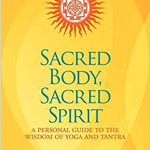
A review of Ramesh Bjonnes’ new book:  Sacred Body, Sacred Spirit: A Personal Guide to the Wisdom of Yoga and Tantra.

In 2008 as the U.S. financial system was in teetering on the edge of disaster, a fearful and confused public was not able to understand the complexities of why and how we had gotten into such a mess. The complex and tangled web of credit default swaps, derivative markets and unprecedented risks the banks had taken were not fully appreciated by the public until Harvard Professor Elizabeth Warren came along to explain them in language lay persons could understand.

Her ability to explain complex concepts to a broad audience changed the national conversation in a positive direction as more people were empowered with levels of knowledge they had been previously unequipped to access.

While in the Western world we’ve had a number of intellectual heavyweights on yoga and tantra such as Georg Feuerstein, Mukunda Stiles and Douglas Brooks (to name a few), we’ve never really had an “Elizabeth Warren of Yoga and Tantra” until Ramesh Bjonnes began writing for elephant journal in 2010.

In the name of full disclosure, I must admit that I’ve been a fan of Ramesh since I began reading his column in elephant journal and I often turned to him for help when seeking to make the authentic more accessible in my own teaching.

In reading Sacred Body, Sacred Spirit, I quickly recognized Ramesh’s ongoing intention to dispel the idea that tantra is a branch from the tree of yoga but rather the reverse that yoga’s roots lie within Tantra itself.   What also stands out clearly is his intention to bring living tantra to a much broader audience.

Within the first pages of the book, he discusses the ideas of Western and Indian yoga scholars who believe that yoga comes solely from the Vedic tradition (brought in either by either Aryan invaders or that the Vedic Aryans were already native to India)—a concept Bjonnes refers to (and rejects) as the “One River Theory.”

Ramesh then offers historical, archeological and genetic evidence to support his own “Two River Theory”—the idea that the history of yoga is actually a blend of the Tantric and Vedic traditions of India.

He continues to weave this idea throughout the book illustrating how the Vedic and Tantric cultures form two worldviews; the former focused on the ritualistic and religious quest for fierce control while the latter is mainly empirical and spiritual and aimed at alchemical transformation.

And despite these seemingly different approaches, he collects and examines broad aspects of yoga and tantra from numerous traditions to show not only how they are related, but as he concludes, that they are essentially the same and perhaps are just seen from a different perspective. This is particularly clear in the chapter Tantra and The Yoga Sutras: If Patanjali had Been A Woman in which he examine’s Nischala Joy Devi’s book The Secret Power of Yoga. In that book, she applies her heart, not just her head, to interpreting the Yoga Sutras with the results sounding more Tantric than Vedic.

For example, Georg Feuerstein’s well-respected translation that “Yoga is the restriction of the fluctuation of consciousness” is held out as an example of the disciplined (and more literal) Vedic approach. Conversely, Nischala Joy Devi’s translation of the same passage reads “Yoga is the uniting of consciousness in the heart”—a more Tantric interpretation of the same original words.

But not to dishonor or dismiss the Vedic interpretation, Bjonnes offers the words of his teacher Anandamutri (who interprets the Sutras much like Feuerstein) that “Patanjali meant that a yogi must suspend his or her mental tendencies (vrittis) in order to find peace and thus, experience the goal of yoga.”

And no book about tantra would be complete without several discussions of the cosmic consciousness of Brahma, composed of Shiva and Shakti. What I particularly appreciate about Ramesh’s approach to discussing Shiva and Shakti is that he does it in a way helps to steer people away from identifying primarily with one or the other (often men to masculine Shiva and women to feminine Shakti) but rather he offers a constant reminder that the two are inseparable because they are one.

In the process, he also offers practical reminders of how to stay aware and connected to the ever-present source, requiring discipline, not indulgence—in both deep practice and deep love while also staying engaged in the world.

In keeping with his intention of offering a book about transforming our ordinary life experiences into sacred ones, he not only discusses broader aspects of yoga and tantra but he also delves into some details on everything from dispelling a myth about when women were allowed to practice yoga, to why Tantric love is not just about sex, to why we chant om at the end of yoga class.  Its only fitting that since some refer to Tantra the “yoga of everything” that this book seems to be about just that: everything, and how it is connected to everything else.

Throughout the book, Ramesh’s discussions can be soaring threads of inspiration but they are also laced with much plain spoken language and often blunt criticism, such as when he refers to the Christian belief in the virgin birth as “irrational hogwash.”

But lest it appear he is picking on any one path or tradition (even science itself), he tries to apply the same rigor to each one being discussed as he turns over many stones the average reader may not have thought to examine. In this sense, the book feels like sitting around the fire with Ramesh on a dark night as he explains each concept and answers questions in a way everyone in the group can understand.

While just under 200 pages, Sacred Body, Sacred Spirit is like a rich mental and spiritual brownie—best enjoyed by taking small bites and allowing them to sink in rather than gulping it down in one sitting.

It seems that today we are blessed with a number of thinkers and teachers on the subjects of yoga and Tantra who seek to fill the role of the bearded sage in the back of the cave, guiding dedicated seekers deeper into the journey of their practice.

I’ve long believed that what we need more of are thinkers and teachers who place themselves at the mouth of the cave of knowledge, seeking to make the authentic more accessible and thus enable more people to have the option to choose the path of Tantra and Yoga.

In Sacred Body, Sacred Spirit, Ramesh Bjonnes fills both of these roles quite well.

Up in the Sandia Mountains overlooking Albuquerque, Chris Courtney reviews Virabhadrasana I (Warrior I) and offers some tips for your home practice. Read the rest of this entry »
Up in the Sandia Mountains overlooking Albuquerque, NM Chris Courtney reviews an often overlooked yoga pose (asana); Arhda Uttanasana (Half Forward Bend). Assisted by Marie-Aude Preau. Read the rest of this entry »
How do you think the Yoga Alliance could better serve yoga teachers, students and the general public? Read the rest of this entry »

Here are some examples of the types of workshops I’m teaching this summer and  winter- we can always tailor one to fit your student’s needs!

Vinyasa on The Edge

What makes us doubt ourselves, our beliefs, and our abilities?  Come on an adventurous journey with Chris Courtney, who channels his experiences as a mountain guide and yoga teacher into an exploration of believing in ourselves, our beliefs, and our abilities.

We start by giving ourselves permission to not be perfect, then he’ll guide you through an ashtanga-inspired vinyasa flow in which you’ll safely find your own edge, where we’ll break down some challenging poses to enable you to sneak across any barriers to a new level of self-belief….laughing all the way!  (Asana and laughter)


Adjustments and Assists For Yoga Teachers
Review and learn how to give gentle, safe and supportive hands-on assists which help students to more fully feel the energy of each asana – all while honoring and supporting their breath and intentions.  For more information on Chris’ approach to yoga assists, see his article on Elephant Journal titled “Yoga Adjustments or Yoga Assists?’ http://www.chriscourtneyyoga.com/?p=158 (Asana and discussion)*

Yoga For Runners and Cyclists

Photo by Rob Dutton


A workshop focused on the specific needs of runners and cyclists.  We build a strong mind-body-breath connection as we flow through a series of asanas and fascia freeing movements to allow you to run/cycle more fluidly while preventing injuries and feeling great!

Yoga For Regular Guys

Can’t touch your toes? Feel more comfortable in a weight room than in a yoga studio? Convinced that yoga is “too New Age-y” — or simply too hard?  This workshop demystifies yoga for the regular guy, in a playful and energetic way which is both accessible and authentic – taught by a regular guy just like you.  Together we’ll get strong, stretched, and confident to attend a regular yoga class without feeling lost or out of place.   And no, we won’t make you wear spandex.   Yes, yoga can be masculine – and fun!

Yoga for Skiers and Snowboarders

Never done yoga but love to ski or snowboard?  No fear – this workshop is for anyone looking for a way to improve their skiing through yoga.  The only requirements are curiosity and an open mind.

Interested in finding core strength, body awareness, and balance that will help take your skiing to another level?   Tired of dealing with tight hips or sore lower back muscles after a weekend on the slopes?  Want to learn how yoga can help prevent skiing-related injuries?

With this 2 hour workshop, you’ll learn how you can use yoga to improve your strength, flexibility, stamina, balance and breathing to improve your skiing and boarding. Whether you want to prevent injury or take your skiing or boarding to the next level, this workshop can help you on the way to achieve your goals!

The Warrior and The Yogi

Who are we?  Our family tells us, society tells us, laws and customs tell us. But what do we say?  How do we get to that place of self-knowledge and conviction where we are able to state without doubt, fear or anger, “This is who I am, this is what I believe, this is how I intend to live my life?”

How do we find our true calling, our soul companions, our destiny? In this task, a powerful ally is the Warrior Ethos. Directed inward, it grounds us, fortifies us and focuses our resolve.  When we find ourselves taking a closer look at the path of yoga, we see not only parallels to the warrior ethos but also that they are a reflection of each other.

Lifelong yogi and warrior Chris Courtney leads you on a journey to understand how to blend the codes of the warrior and the yogi into a powerful and fulfilling life practice, all while building a more peaceful and just world. (Discussion and asana)


Newsletter Signup!
Articles, recipes, ideas and more!
Chris’ Radio Interview
Listen to internet radio with YogaFestival on Blog Talk Radio